
“Sports don’t automatically build character — they shape it, for better or worse.” A growing field is taking that seriously.
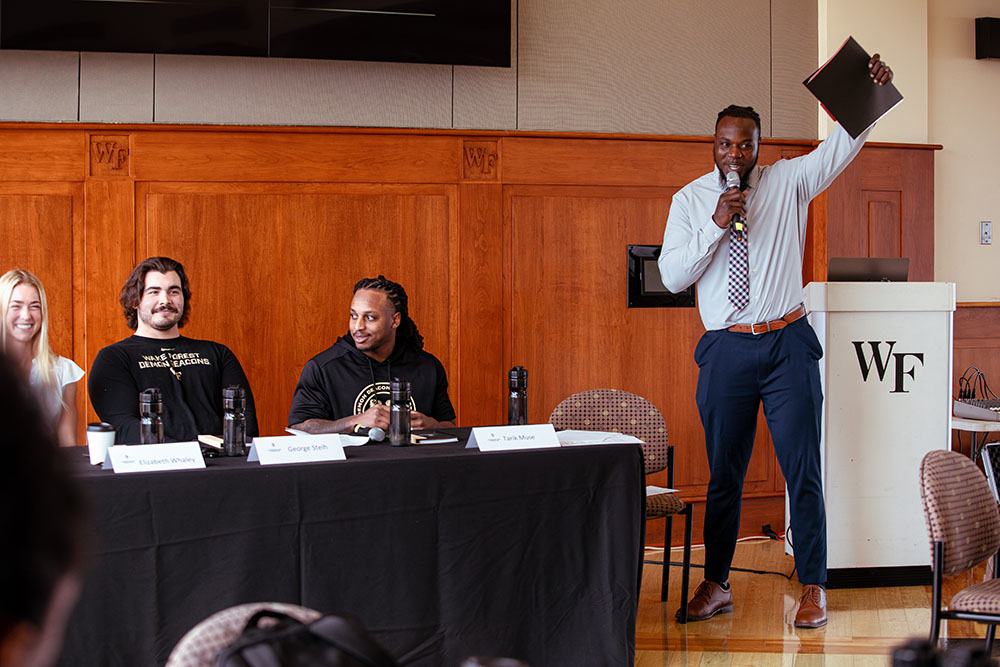
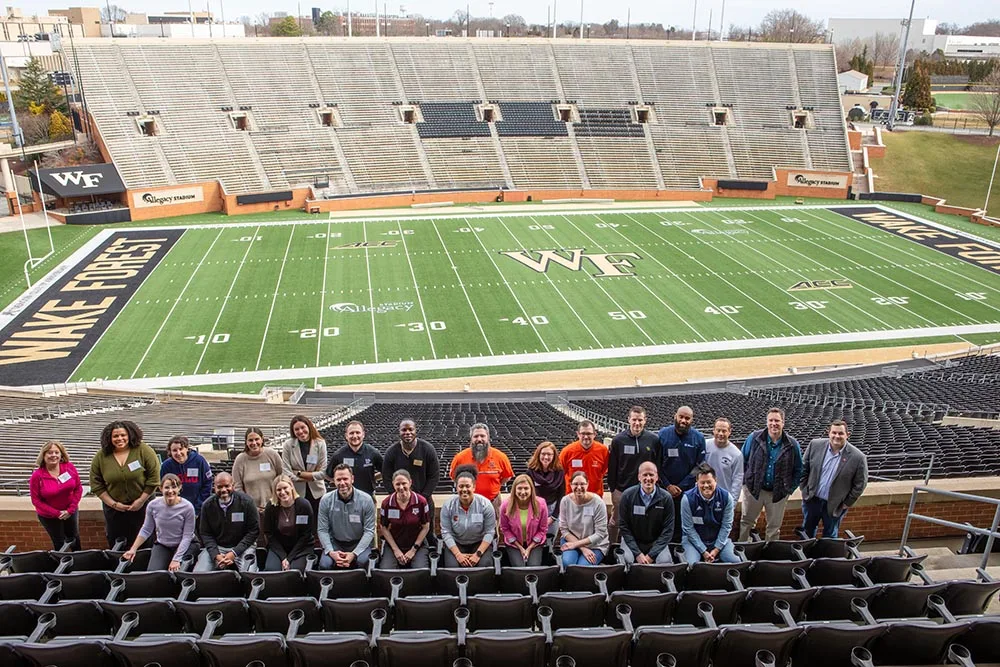
On a rainy February morning, athletics leaders from across the country gathered on the fourth floor of the tower at Wake Forest University’s football stadium. As they put on name tags, this diverse group of coaches, athletic directors, trainers, and academics connected faces to familiar names from academic journals and sports pages. They had come together for the Educating Character Initiative Competitive Edge Convening, a two-day event focused on promoting character development in college sports.
“What made this event so powerful is the fact that the community is already so big, but there’s never been an opportunity where we can bring everyone together and learn from each other. And I think that’s what we did here with our convening,” reflected one of the event’s lead facilitators, Wendell Dunn, Assistant Director of Leadership and Character in Athletics for the Program for Leadership and Character at Wake Forest.
“What made this event so powerful is the fact that the community is already so big, but there’s never been an opportunity where we can bring everyone together and learn from each other. And I think that’s what we did here with our convening.”
Wendell Dunn, Wake Forest University
Academics and practitioners face both challenges and opportunities.
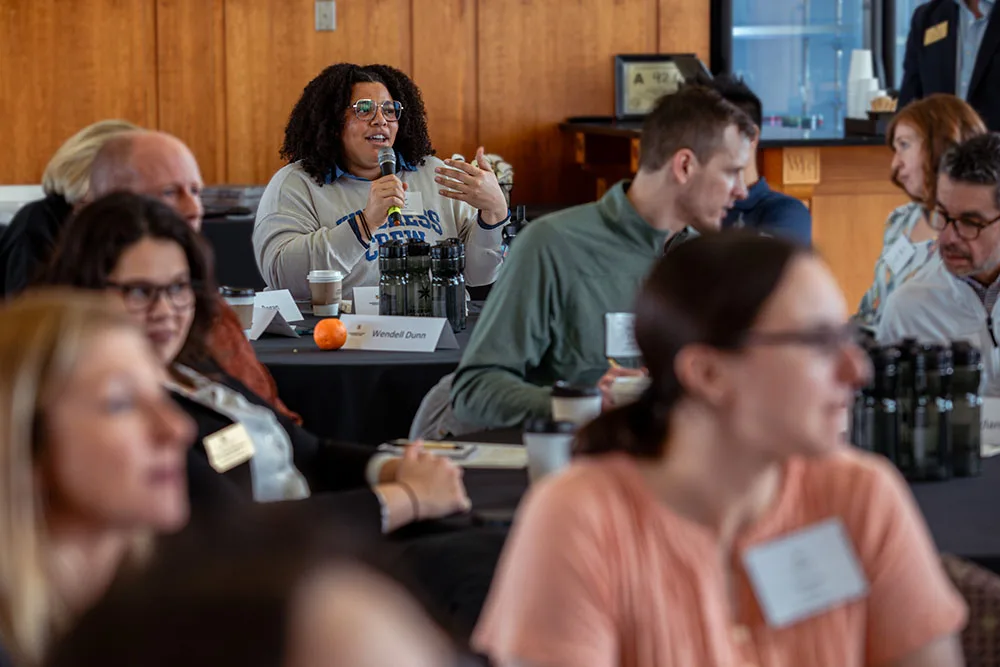
While the study of character in athletics may seem niche, practitioners face a range of challenges. By bringing scholars and practitioners from various roles together, the convening created spaces to build relationships, exchange expertise, and spark new ideas and solutions to address these challenges.
“There’s no shortage of cliches related to character and athletics: ‘Sports build character, ‘ or ‘sports don’t build character, they reveal it.’” reflected Chad Carlson, Professor of Kinesiology and Sport Studies and Hope Character Hub Director at Hope College.
Carlson noted that sports’ widespread popularity gives character work a broad platform — but that advantage comes with a challenge. “The performance-driven ethic that’s growing in the world of sport means that character work has to prove its value to become anything more than window dressing to the leaders in the sports industries.”
Corey Crossan, another lead facilitator and Assistant Director of Programming and Research Scholar for the Program for Leadership and Character at Wake Forest, identified embedding character into the core of athletic programs as a key challenge. This requires elevating character alongside technical, tactical, and physical training, and aligning recruitment, selection, reward structures, athlete development, coach education, and fan engagement to reinforce character as a priority.
Dorian Shaw, Assistant Athletic Director for Talent, Character & Culture Development at the University of Delaware, works directly with student leaders from each of the university’s teams on their character development. She said she found Crossan’s Character Wheel particularly helpful and would use it as a foundational source for some of her future programming. “The Character Wheel could serve as a seamless thread that could connect a lot of the programming we already have in place, but lend more consistency and structure to our work.”
“The convening exposed me to new research that will continue to support the argument that character work in sport is an essential element to the overall student-athlete experience.”
Dorian Shaw, University of Delaware
“The convening exposed me to new research that will continue to support the argument that character work in sport is an essential element to the overall student-athlete experience,” Shaw reflected. “I believe this will allow us to further validate our work and efforts with our coaches and administrators to solicit their buy-in. Buy-in from our leadership will heighten the value our athletes see in the time and effort they put into their own character development.”

According to Crossan, while implementing character development in athletics poses challenges, it also offers opportunities. In some ways, she explained, character is already highly valued. Athletes recognize that qualities like resilience are essential for both performance and life. Coaches often develop character implicitly.
“The opportunity is to make the value of character explicit — and to rethink what we mean by character in sport. It’s not just about being a good person — though it certainly is; it’s also a competitive advantage, shaping performance in and beyond sport,” Crossan said. “With intentional focus, we can apply evidence-based strategies to develop character more systematically. Because sport doesn’t automatically build character—it shapes it, for better or for worse.”
“With intentional focus, we can apply evidence-based strategies to develop character more systematically. Because sport doesn’t automatically build character—it shapes it, for better or for worse.”
Corey Crossan, Wake Forest University
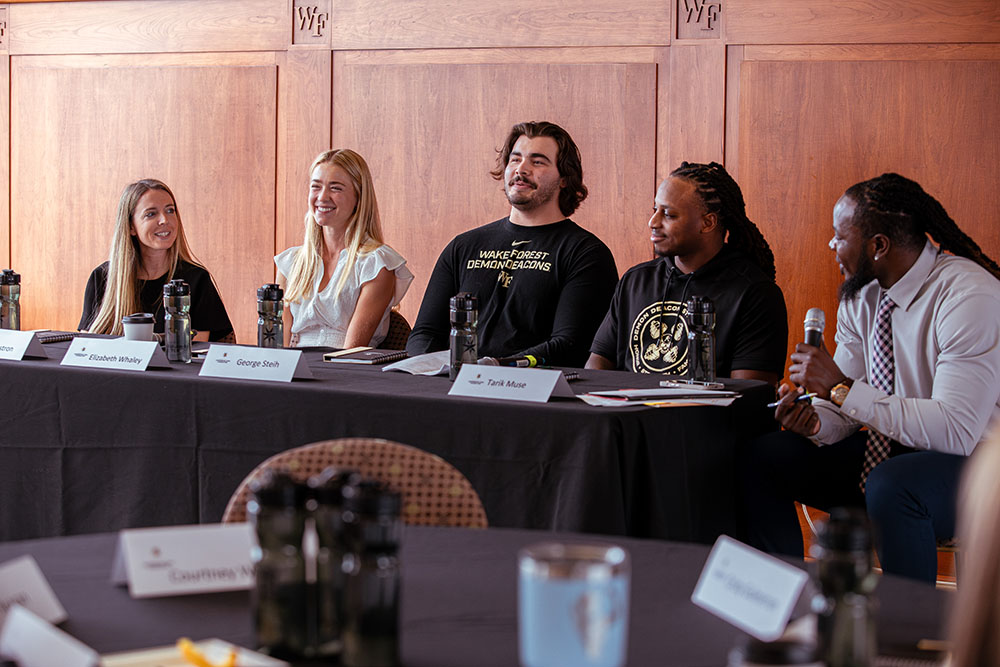
Attendees identified the plenary panel, “Character, Purpose, and Performance,” as a highlight of the event. Dunn moderated the panel, which included two Wake Forest coaches and two current student-athletes. They discussed how seeing coaches model character supports both athletes’ performance and character development.
“The unique opportunity about character and athletics is that coaches are already doing the work. Athletes are already building on their virtues and values, and it’s great when coaches are eager to find more ways to help their student athletes develop as people and use that to compete at a high level,” Dunn reflected.
For Liz Whiting, Scholar of Character for the Educating Character Initiative and one of the event’s lead facilitators, the panel provided examples of how the coach-athlete relationship can be especially powerful in supporting both parties’ development. “Coaches have a chance to help athletes develop habits and new forms of perception. They sometimes focus exclusively on motor skills, but they often focus on social habits and perceptions, which are inevitably moral in nature, too. Relationships among teammates can do the same, as athletes constantly model for each other how to treat others, on and off the court. Emerging adults are learning from their peers more than anyone.”
Jamie Brunsdon, Assistant Professor of Physical Education & Sport Pedagogy at the University of Memphis, found the panel energizing. “The panel led by coaches, trainers, and athletes of Wake Forest University provided sincere insights into characterful athletics. What does it mean to be a coach of character? In what ways can athletes embody virtue in times of struggle? How is it possible to foster authentic relationships between athletes when ‘life happens?’ Such questions, and many others, afforded a rich insight into how character can become the heartbeat of an institution.”
Collaboration emerged as a strength among athletics leaders at the convening.
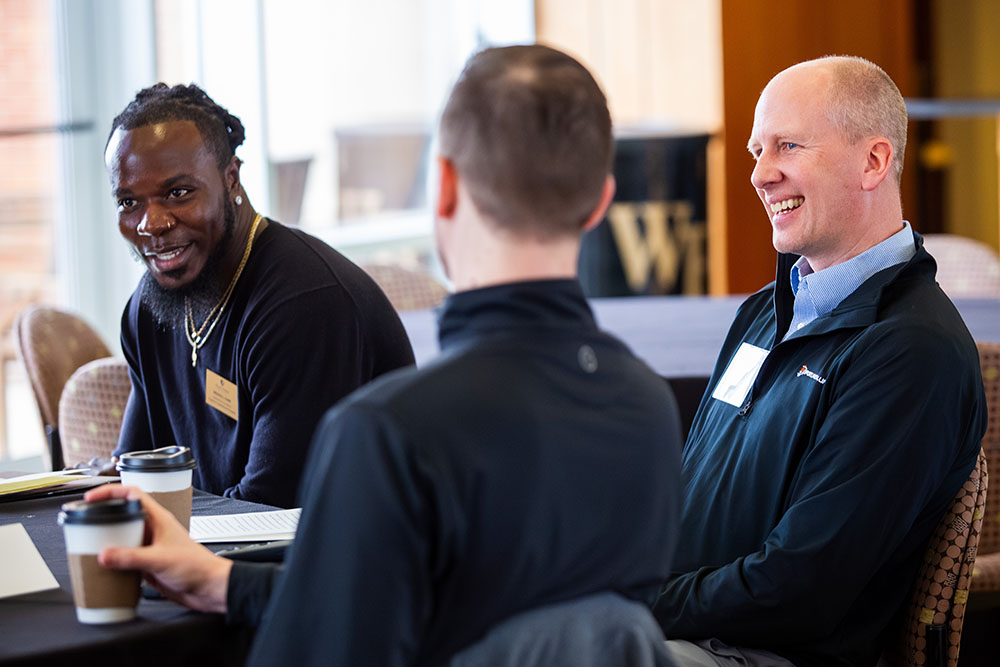
For Carlson, this event provided a different experience than he normally encounters in his academic work, where he collaborates primarily with other scholars. This convening included current athletes, coaches, sport administrators, higher ed administrators, scholars from many different disciplines, and athletic support staff. “The contacts I made with practitioners and academics from other disciplines will help broaden my work and my awareness of the work going on at the intersection of athletics and character,” he reflected.
“I’ve already connected with others from this convening. We’ve already shared consultation meetings, podcast interviews on shared topics, and early drafting of scholarly publications,” said Carlson. “And all of this is inspired by the engagement with this community of practice I wouldn’t have connected with were it not for the leadership of the ECI to get us all in a room together for a weekend.”
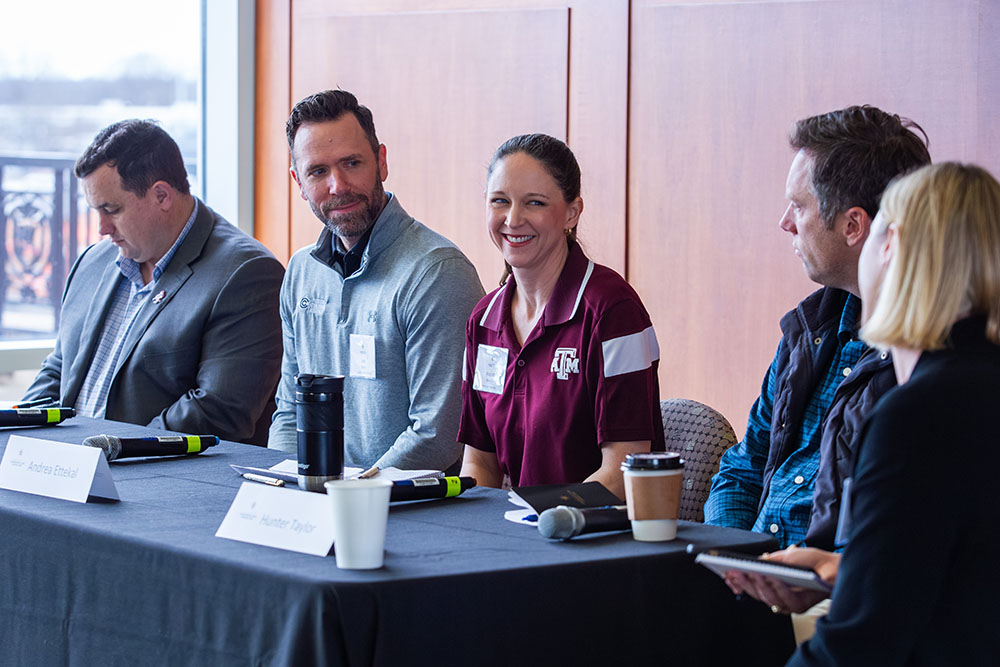
Andrea Ettekal, Associate Professor of Educational Psychology at Texas A&M University, called the event “the single best ‘think tank’ convening, possibly ever,” praising the diversity of perspectives and the quality of connection among participants. “I have not returned from a trip with such energy. Within 24 hours of returning, I’ve generated three one-pagers on different projects and collaboration ideas. And, I have a new set of colleagues, collaborators, and I would even say, friends!”
The feeling was mutual. Brunsdon reported, “I had many wonderful conversations during the convening, the most valuable of which occurred with Dr. Andrea Ettekal of Texas A&M, who, on several occasions, provided such rich insights into the complex paradigm of character, competition, and athletics.”
Brunsdon also highlighted a presentation by Denise Vigani of Seton Hall University on “Virtue & Sport: Developing Embodied Skills.” From his perspective as a sport pedagogue, he found it remarkable to see Vigani draw on motor control literature — a field far removed from moral philosophy — and interpret it through the lens of Aristotle’s virtue theory. “It is an example of wonderful work that is genuinely moving the field forward.”
Looking ahead: next steps for this community.

Whiting’s intent in organizing this event was to gather people with a shared commitment to treating college sports as a locus of character with the goal of nurturing relationships and seeding future collaborations. “I hope participants left feeling that they are not alone in seeing college sports as an avenue for character development. Nor are they alone in holding to a particular ethos of college athletics, which treats the student-athlete as a whole person, deserving of respect and care, with great potential for character development,” she said. “I hope they continue to reach out to each other to generate creative program interventions, access helpful scholarship, and find ways to support their students.”
For his part, Dunn is energized by joining a larger community. “There’s strength in numbers. Right now on Wake Forest’s campus, there are two of us doing this work. But now I’ve connected with more than 15 individuals who have creative ideas for expanding leadership and character in athletics,” he said.“Together, we have endless support to offer coaches and student athletes, with many new tools and opportunities to do so.”
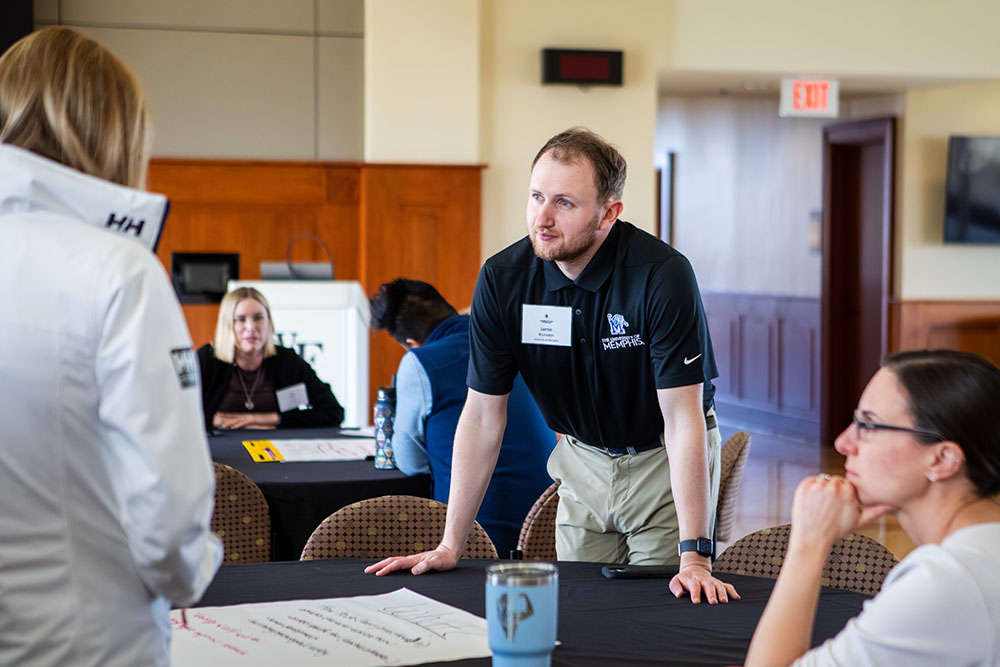
For Brunsdon, the convening reinforced the importance of interdisciplinary collaboration in building character-driven athletics. He noted that five distinct stakeholder groups each brought different frameworks for understanding and promoting character in sport. “To be effective beyond this convening, we agreed on the need to involve and understand the value of each other’s work if we are to make serious gains as a field and community.”
“Progress will only be possible if we improve our ability to listen and learn from one another, and if we aspire to build upon the community that was established during the convening. It will take all of us to advance this work. And the perk of working in athletics is that we’re already wearing polos and so our sleeves are already rolled up!” he quipped.
“Progress will only be possible if we improve our ability to listen and learn from one another, and if we aspire to build upon the community that was established during the convening. It will take all of us to advance this work.”
Jamie Brunsdon, University of Memphis
“My hope for ongoing engagement with other institutions with similar goals is to build on this community,” said Dunn. “A lot of us at the convening said this is our first time being amongst so many individuals who are like-minded — but bringing so many different ideas and so many different views on what leadership and character can look like. And I think that’s a strength.”
Back to ECI News and Stories