
Advice from current grantees: What to know before you apply
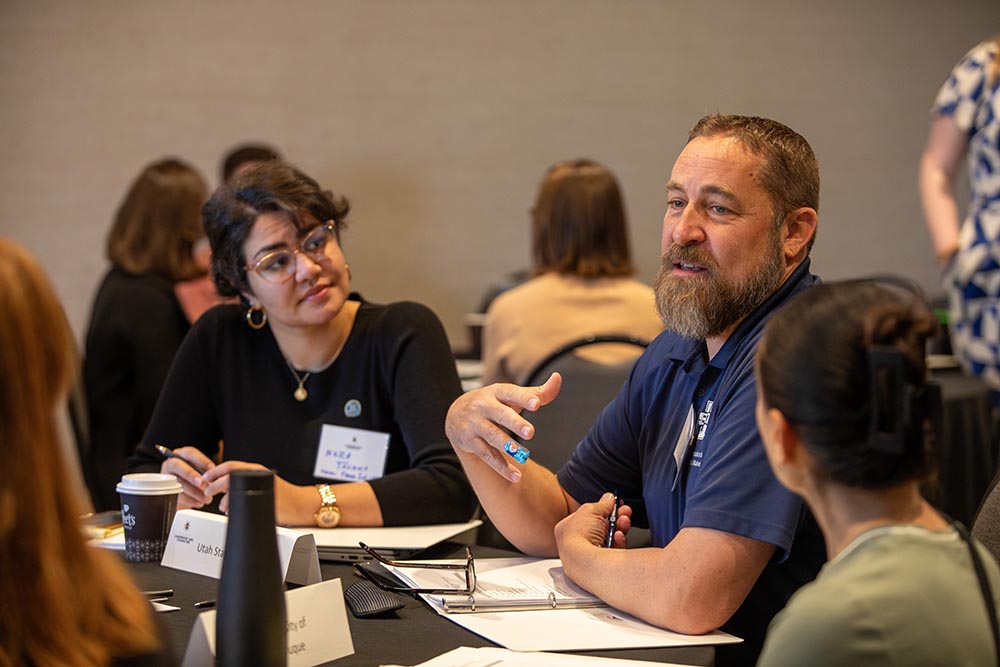
Taking the step to apply for a grant is both exciting and meaningful, especially as you work to advance a vision rooted in your institution’s mission and community. If you are considering submitting a proposal to the Educating Character Initiative in 2026, you may be wondering what the process looks like. Many current grantees have stood where you are now, exploring possibilities, engaging in campus conversations, and turning their ideas into a thoughtful plan.
The guidance below comes from faculty and staff who have completed this process and are now leading character education efforts on their campuses. They share what helped them develop strong proposals, build partnerships, and connect their ideas to their institutions’ needs. Together, they remind us that this work matters, that there’s room for many approaches, and that you are not alone in the process.
1. Dream Big — Then Shape the Dream into a Plan
“Dream big, and think about how this funding could help you do things you wouldn’t be able to do otherwise. It’s those ideas that keep you up at night, or get you excited to think about, ‘if only we had the money, we would do this.’ Start from dreaming big, and then formulate that into a plan.”
— Nathan Webb, Belmont University, Institutional Impact Grantee
2. Don’t Self-Select Out—There Is Room for Your Work
“Do not be discouraged from applying. And I just cannot stress that enough, that even if you think your project might be imperfect, or narrow, or not innovative enough, or maybe non-traditional, there is space for your work.”
— Suzanne Chod, North Central College, Capacity-Building Grantee
3. Build Cross-Campus Collaboration—As Early As Possible
“Get the largest, most diverse team you can at the earliest stage possible for your conception and your grant writing process. When we had faculty, staff, and students in the room, we were able to have more open conversations; everyone shared their wishes and hopes, and we could determine whether those fit (the RFP) or didn’t, and how we might implement these ideas.”
— Anthony Bateza, St. Olaf College, Institutional Impact Grantee
“Think about how you can encourage and cultivate excitement and buy-in across the campus. These initiatives will have a greater impact if the entire campus community, or a larger portion of it, gets involved… Think about champions who are already doing the work, and exemplars, and look for ways to hold them up as you’re building excitement.”
— Nathan Webb, Belmont University, Institutional Impact Grantee
“Name your need for resources and aspiration for something you really, actually want to do and believe in and think would be the catalyst for getting over some real or imagined barrier to a deepened formation on your campus. For us, there really has been a sense of love for all those co-curricular people and programs; we’d love to know what they are doing, and do we agree? And this opportunity gave us the resources to get together, learn from each other, and get after something. Think of it not in terms of trying to get the grant, but just: what are you really hoping for your institution, and how could it help you get there.”
— Joseph Clair, George Fox University, Institutional Impact Grantee
4. Balance Grassroots Energy with Institutional Support
“I’m really grateful for the institutional support that we had. And I just think that that makes a difference. And so, to the degree that applicants can secure institutional support, then you won’t feel that you’re just on an island — or you’re doing something that, when the grant ends, if you’re not carrying the mantle, the impact goes away. To the degree that you can weave that institutional support into your proposal, I believe it will make a greater difference and have a longer-lasting impact. So I’m very grateful to our administrators for their support in doing that.”
— Daryl Van Tongeren, Hope College, Institutional Impact Grantee
“I think the combination of both the grassroots, ground-up approach and the top-down support is really important for folks when they’re considering this project. Sometimes colleges or projects have too much of one or the other and don’t have enough balance.
Faculty and students want to be included; they want to know that their contributions will make a difference to the final outcome and that they’re not just being consulted to check a box and say, ‘faculty heard about this, now full speed ahead.’
Character and leadership are a part of our new strategic plan. So while I’m doing a lot of the grassroots, down-up, investment-building, some top-down things are going on as leadership figures out how to implement the strategic plan, how the board gets looped in, and what kind of funding sources they might draw in for activities the grant isn’t supporting and make the whole effort sustainable.
So far, it’s been really helpful to see where these two directions are coming together and to see this back-and-forth conversation.”
— Anthony Bateza, St. Olaf College, Institutional Impact Grantee
5. Stay True to Your Institution — But Make Sure You’re Writing a Character Project
“It is really easy to dream amazing ideas, but I think part of that is also going back repeatedly to that original grant call. What is the sentiment? Are we staying true to that, and are we staying true to our university?”
— Melissa Jones, University of Mississippi, Institutional Impact Grantee
6. Connect with the ECI Team Early and Often
“Take EVERY opportunity to connect with the team. Our meetings with Aaron were immeasurably valuable, and when the feedback you’re getting from the team is, ‘Don’t dilute, turn it up, be you, show us what you’re doing,’ that’s genuine. I just can’t stress those things enough.”
— Suzanne Chod, North Central College, Capacity-Building Grantee
7. Remember Why This Work Matters—And Why Now
“Anybody who’s thinking about doing this, do it. That may seem like a throwaway statement, but I would argue that our industry and the broader world need this type of education. We have an opportunity: some funders with significant resources recognize the value of this work, including the Lilly Endowment, and they’re willing to invest tens of millions of dollars in this project alone. And they are eager to provide capital to meet, I would argue, a really pressing need in society. And so, jump in and figure out how you can play a part in meeting that need, that would be my advice.”
— Nathan Webb, Belmont University, Institutional Impact Grantee
“For folks who are thinking about applying, do it. This work is so important right now. We’re going through a period of preparing young people for a highly uncertain world. There are economic challenges that come with new technology, political and social challenges, and ethical challenges that arise from a world dealing with a lot of really heavy problems. We’ve got just a few years on these college campuses to really make a difference in these young people’s lives and to prepare them to go into that world. If you are faculty and staff who feel like you’re very called to do that work for the students on your campus, go heed the call, go after it right now, because this is one of the most important things, I think, that we can be doing on campus.”
— Meghan Sullivan, University of Notre Dame, Institutional Impact Grantee