
Upcoming Webinars and Book Club
Educating Character Initiative Fall 2026 Webinar Series: Building Capacity and Addressing Barriers
Join us for a series of online webinar sessions focused on building capacity and addressing barriers in educating character, moderated by Aaron D. Cobb, Director of Collective Learning with the Educating Character Initiative at Wake Forest University. These sessions feature panelists and presenters who will equip participants to build capacity on their campuses by scaffolding capacities through professional development and communities of practice, by attending to the needs of moral repair, and by articulating and adapting frameworks fitting for their distinctive contexts. We are pleased to offer these webinars in a virtual forum that enables more of the ECI community to learn from colleagues doing important work across the country!
Session 4: Discerning a Framework for Character Formation at Your Institution
Session Leaders: Tom Harrison, Professor of Education, Deputy Pro-Vice Chancellor (Education), and Director of the Jubilee Centre for Character & Virtues, University of Birmingham; Andrew Peterson, Professor of Character and Citizenship Education, Head of Department, Education and Social Justice, University of Birmingham.
Description: Institutions of higher education often look to the Jubilee Centre’s Character Education in Universities: A Framework for Flourishing, a framework developed in coordination with the Oxford Character Project, to help them articulate an approach to character for their institutions. Some of these teams simply appeal to the framework and indicate that they will apply it; others point to pieces of this framework and say how they might adapt it for work in their context. Join the Director and Deputy Director of the Jubilee Centre for a conversation about the work discerning how best to employ this framework for contextualized institutional work.
Date/Time: November 24, 2026 at 11 a.m. ET
Moderator: Aaron D. Cobb, Director of Collective Learning, Educating Character Initiative
The Flourishing Student Webinar Series, in Partnership with the Jubilee Centre for Character and Virtues at The University of Birmingham
In recent years, many universities have expressed their commitment to a holistic, socially-engaged vision of higher education and are increasingly talking about supporting students in developing ‘character’ and ‘attributes’. These are the qualities students need to navigate the fourth industrial revolution, flourish, and make a positive contribution to society.
This international webinar series, presented in partnership with the Jubilee Centre for Character and Virtues at The University of Birmingham, features presentations on universities’ role in helping their students cultivate the character and attributes required for human flourishing. Following the success of the first and second series, this third series will feature six additional world-leading universities renowned for their focus on character education, sharing their knowledge and expertise.
The next series will be announced soon.
ECI Community Book Club
Our book club engages authors in conversations about their published books and their implications for character-building efforts. An ECI Scholar of Character interviews the author during the first half of each gathering, and the second half is devoted to audience Q&A.
Fall 2026
Rescuing Socrates: How the Great Books Changed My Life and Why They Matter for a New Generation by Roosevelt Montás
Book Description
What is the value of a liberal education? Traditionally characterized by a rigorous engagement with the classics of Western thought and literature, this approach to education is all but extinct in American universities, replaced by flexible distribution requirements and ever-narrower academic specialization. Many academics attack the very idea of a Western canon as chauvinistic, while the general public increasingly doubts the value of the humanities. In Rescuing Socrates, Dominican-born American academic Roosevelt Montás tells the story of how a liberal education transformed his life, and offers an intimate account of the relevance of the Great Books today, especially to members of historically marginalized communities.
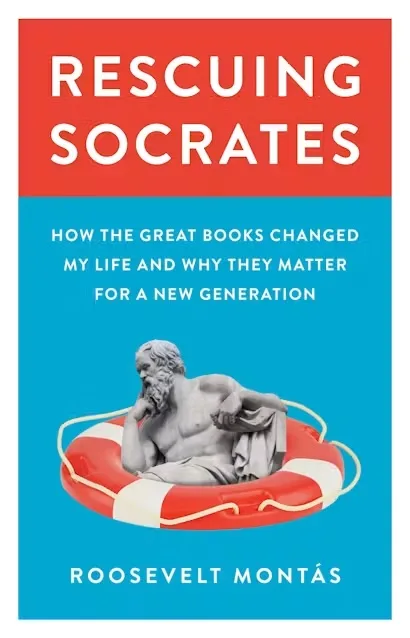
Montás emigrated from the Dominican Republic to Queens, New York, when he was twelve and encountered the Western classics as an undergraduate in Columbia University’s renowned Core Curriculum, one of America’s last remaining Great Books programs. The experience changed his life and determined his career—he went on to earn a PhD in English and comparative literature, serve as director of Columbia’s Center for the Core Curriculum, and start a Great Books program for low-income high school students who aspire to be the first in their families to attend college.
Weaving together memoir and literary reflection, Rescuing Socrates describes how four authors—Plato, Augustine, Freud, and Gandhi—had a profound impact on Montás’s life. In doing so, the book drives home what it’s like to experience a liberal education—and why it can still remake lives.
Author Bio
Roosevelt Montás is the inaugural Laura Y. Chang and Arnold Chavkin Professor in Liberal Education and Civic Life at Bard College. He is also the inaugural executive director of the Chang Chavkin Center for Liberal Education and Civic Life, with a mission to revitalize liberal education in colleges and universities nationwide. From 2008 to 2018, he served as Director of the Center for the Core Curriculum at Columbia University. At Columbia, he also directed the Freedom and Citizenship Program, which introduces low-income high school students to the Western political tradition through the study of original texts.
Roosevelt was born in the Dominican Republic and immigrated to New York as a teenager, where he attended public schools in Queens. His book Rescuing Socrates: How the Great Books Changed My Life and Why They Matter for a New Generation (Princeton University Press, 2021) reflects on his experiences as a student and teacher at Columbia University, explaining how a liberal education transformed his life and why Great Books have the power to speak to people of all backgrounds. He is also author of Becoming America: Four Documents That Shaped a Nation and Why Their Ideas Still Matter (forthcoming, Princeton University Press, 2027) and co-editor of The Princeton History of American Political Thought (forthcoming, Princeton University Press, 2027). He speaks and writes on the history, place, and future of liberal education and his essays have appeared in The Atlantic, Commonweal, The Los Angeles Times, The Point Magazine, The Financial Times, Aeon Magazine, The Wall Street Journal, The Chronicle of Higher Education, Inside Higher Ed, The Dispatch, and other outlets.
Date and Time
Tuesday, November 3, 2026 at 4 p.m. ET
Spring 2027
Keeping Our Enemies Closer: Political Dialogue in Polarized Democracies by Rachel Wahl
Book Description
This book is borne of a set of questions: What happens when people try to understand each other across searing political divides? What good can come of these conversations and for whom, and what harm? Essentially: What can talk do for democracy and for people who live in democratic societies, and how does talk fall short?
To explore these questions, the book tells the stories of law enforcement officers, community activists, college students, and other everyday people who try, to varying degrees of satisfaction, to talk to the people whose political views they oppose.
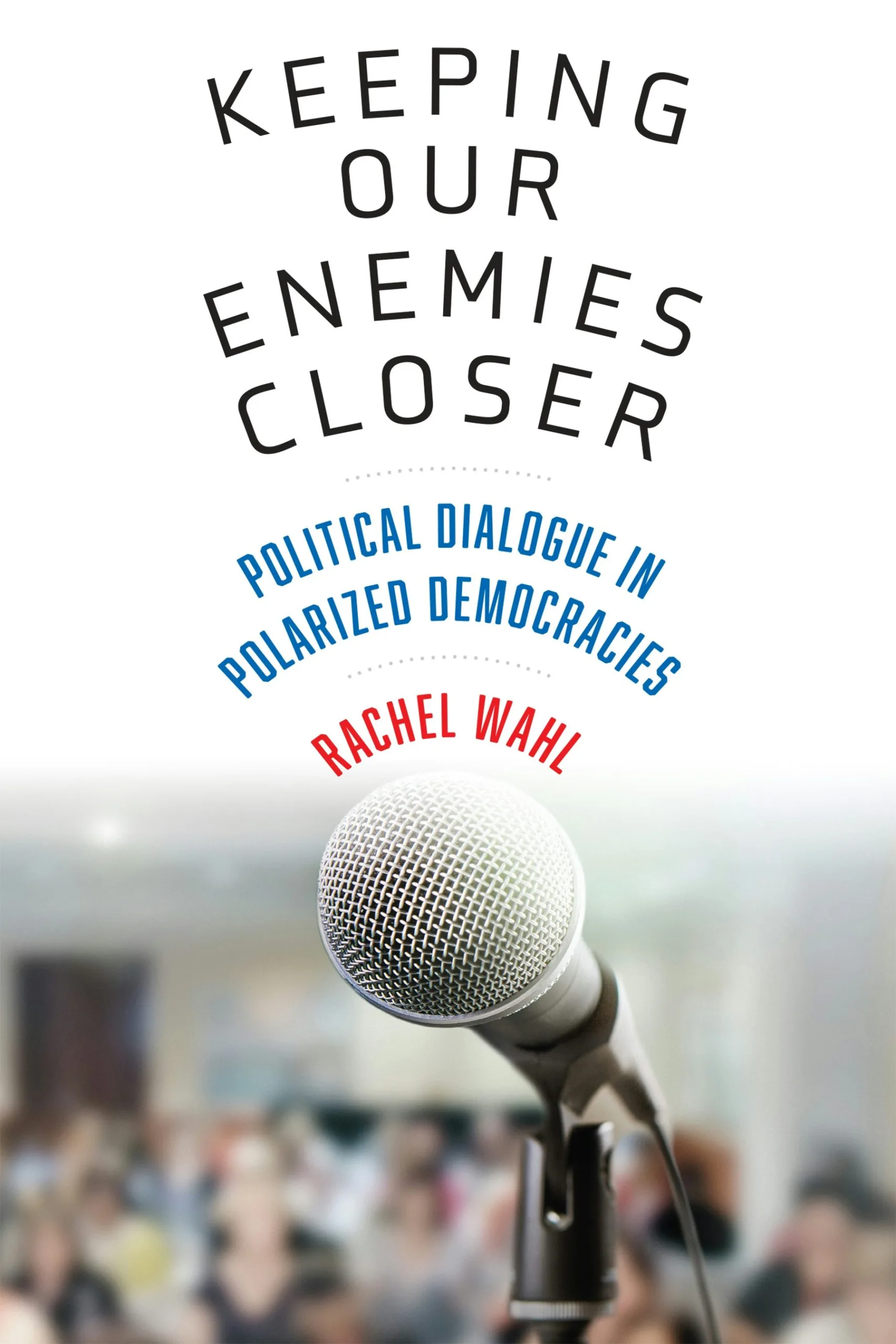
To tell these stories, the author spent years observing public forums on college campuses and community centers, which brought together people who would not otherwise be inclined to converse. She then conducted long and probing interviews with participants, in the weeks after these forums and then again several years later, to see what had continued to matter to people about their experience.
For readers who already feel inclined toward talking across political divides but sometimes feel unsure about why or how, the book specifies what good does emerge from these conversations and how to make such outcomes more likely. This should be helpful to everyday people hoping to hold these conversations in their own lives as well as to educators and others who facilitate structured conversations such as in classrooms or with communities and organizations. Yet the book also takes seriously the concerns of people who have long been critical of “civil discourse.” The book shows how and when critics’ worries are instantiated and how these dilemmas might be ameliorated. Not least, the book is intended for those who wish for clarity on why speech, of all forms of political action, is the subject of such intense controversy.
Author Bio:
Rachel Wahl is an Associate Professor and Director of the Social Foundations of Education Program in the Department of Educational Leadership, Foundations, and Policy at the School of Education and Human Development at the University of Virginia. She also serves as the Director of the Good Life Political Project at the Karsh Institute of Democracy.
Her research examines what happens when people attempt to talk across some of the most searing political divides, such as college campuses that hold conversations between students on the political Left and Right; dialogue efforts in Charlottesville, VA in the aftermath of the deadly 2017 Unite the Right rally; and public forums between community members and law enforcement officers. Her research has been funded by the David L. Boren National Security Education Fellowship; the Carnegie Corporation; the Spencer Foundation; and the National Academy of Education among others. Her earlier research examined the role of activism and education in relations between civil society and state actors. This research on how public pressure and educational approaches shape the way public officials respond to divisive issues such as human rights abuses resulted in her first book, Just Violence: Torture and Human Rights in the Eyes of the Police (Stanford University Press, 2017) and serves as a foundation for her current research on political dialogue.
Date and Time
Tuesday, February 9, 2027 at 4 p.m. ET
Keeping Our Enemies Closer: Political Dialogue in Polarized Democracies by Rachel Wahl
Book Description
Aristotelian Naturalism (AN) has enjoyed a surge of interest in recent decades, and the field is now ripe for elaborations that go beyond, or critique, its traditional formulations. If we are to take seriously challenges to AN emerging from advances in feminist philosophy, disability theory, and social sciences, while taking seriously its naturalism we need to provide an empirical update to the account of human goodness and virtue. On the pluralist form of AN developed here, human goodness is not a single, unitary ideal out of reach for the majority world. Instead, following mundane evaluative practice and thought as well as social scientific evidence, I argue that people in a wide range of bodily, social, and environmental contexts can and do flourish.
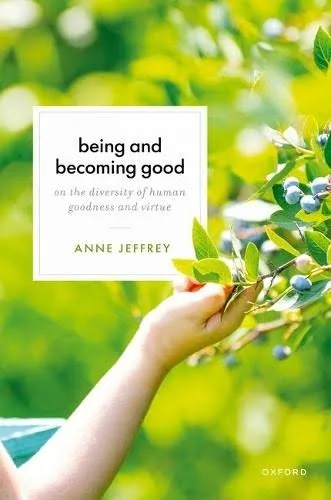
Moreover, people exhibit a variety of distinct forms of human goodness, all equally valuable, and different sets of virtues fit them for flourishing in these discrete contexts. This means that the ethical terrain is rather complex, populated by a multitude of peaks that people can ascend by a variety of paths rather than a single mountain we all should try to summit from wherever we are. Once we recognize the genuine diversity of forms human good lives take, and how the virtues suited for one type of life might simultaneously enable us to achieve other forms of flourishing, we will see how most people are for most of their lives simultaneously being and becoming good.
Author Bio:
Anne Jeffrey is an Associate Professor of Philosophy at Baylor University and Research Scholar at Baylor College of Medicine. She has written articles in political philosophy, moral psychology, normative ethics, and philosophy of religion and authored two monographs—God and Morality (Cambridge University Press, 2019) and Being and Becoming Good: On the Diversity of Human Goodness and Virtue(Oxford University Press, 2026). Recently, she has been writing critically on habits thought to contribute to repair in conflict, like love of enemy, patience, and forgiveness. Together with Krista Mehari, Marie Chastang, and community members in the southern US, she helped build and test Empowered, an intervention to help adolescents in high violence areas to grow in hope, peace, wisdom, forgiveness, and justice.
Date and Time
Tuesday, April 13, 2027 at 4 p.m. ET